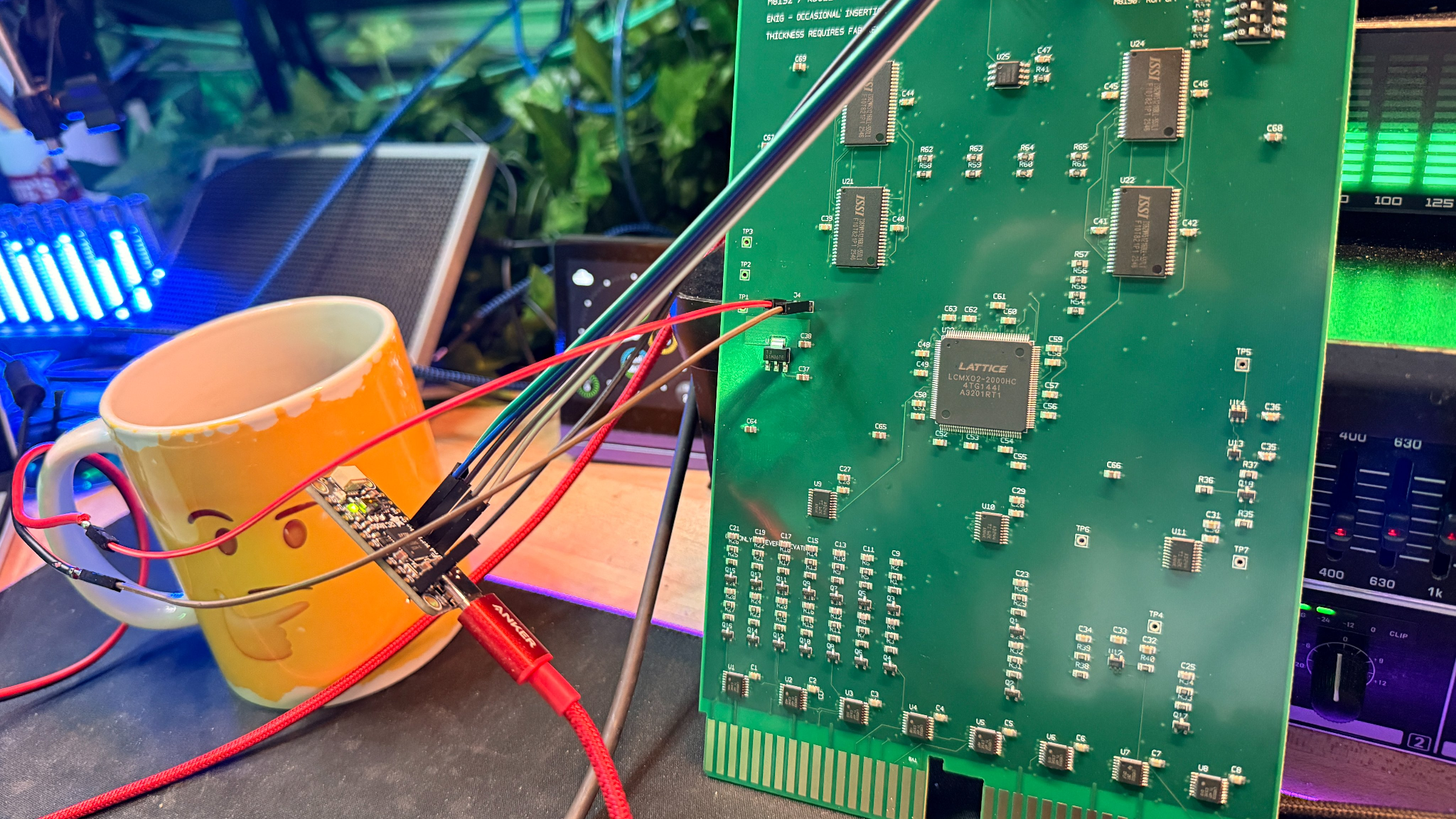
Building vintage computer hardware is usually an exercise in patience, specialized knowledge, and deep pockets. When a former software developer looked into expanding the memory of a classic 1970s PDP-11 computer, the sheer cost of original memory modules proved staggering. Rather than accepting sky-high prices for legacy components, he decided to engineer a custom RAM board from scratch, enlisting artificial intelligence to help bridge the knowledge gap.
Designing a Custom Memory Board
The PDP-11 system utilizes Q-Bus architecture for its primary components, allowing expansion cards to interface directly with the central processing unit. To replicate this functionality, the project involved designing a standalone circuit board featuring a Lattice MachXO2 FPGA to act as a memory controller, paired with four 1 megabyte ISSI memory chips, a U2S I/O chip, DIP switches, and necessary support capacitors.
Because the creator had limited prior experience with complex hardware design or flash-programming FPGA chips, artificial intelligence tools and online circuit simulators served as primary assistants throughout the development process. However, putting together a custom memory subsystem for a decades-old mainframe is rarely a straightforward endeavor.
Overcoming Architecture Hurdles
Initial hardware tests revealed a classic architectural trap rooted in how older 16-bit systems manage data transactions. The PDP-11 memory bus architecture is designed to access entire 16-bit words simultaneously rather than addressing individual bytes directly. The lowest bit of any memory address acts as a lane selector to distinguish between the high and low byte during read and write cycles.
During initial testing, the custom controller failed to account for this distinction properly, resulting in a system that effectively utilized only half of its installed memory capacity because every alternating word location remained unaddressed. Resolving the issue required adjusting the FPGA logic to properly handle byte-level write operations and address mapping, highlighting the unique challenges of mating modern silicon with vintage computing standards.
The "only returns every second word" bug is a nice example of where AI help runs out. The PDP-11 addresses bytes but the bus moves 16-bit words, so if address bit 0 ends up in the SRAM address, every odd location is never used and 4 MB behaves like 2 MB.
While software tools and generative models can rapidly draft circuit layouts and HDL code, low-level hardware design still demands rigorous attention to legacy bus protocols and system documentation. Projects like this demonstrate how modern prototyping tools enable hobbyists to revive vintage machines, even if bridging the gap across fifty years of computing evolution requires a few troubleshooting iterations along the way.

